
Gujarat Helmet Drive Catches 1.88 Lakh Road Safety Violators
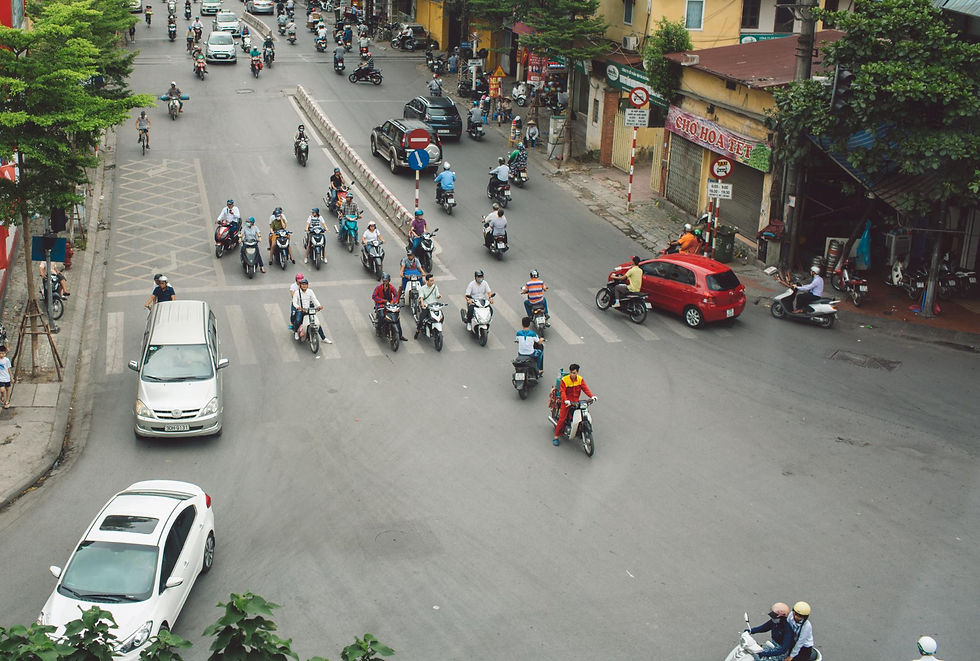
Gujarat's month-long statewide helmet enforcement campaign has produced results that confirm both the scale of the state's helmet non-compliance challenge and the seriousness with which its police force pursued the drive. The special Helmet Drive, conducted from May 1 to May 31, 2026, under the instructions of Deputy Chief Minister Harsh Sanghavi, resulted in punitive action against more than 1.88 lakh motorists and the collection of fines amounting to Rs 5.21 crore — figures released by the State Traffic Branch that place Gujarat's enforcement intensity among the most significant statewide helmet drives conducted in India this year.
Overview of Gujarat's May 2026 Helmet Drive Results
A Month of Sustained Statewide Enforcement
The scale of Gujarat's May 2026 helmet drive — more than 1.88 lakh motorists penalised across a single month — reflects the sustained, statewide enforcement architecture that was established when the campaign was first announced. The drive was launched with the stated aim of improving road safety, reducing fatalities in traffic accidents and encouraging greater compliance with traffic regulations — a three-part objective that explicitly links enforcement activity to road safety outcomes rather than treating penalty collection as an end in itself.
The Rs 5.21 crore in fines collected over the month represents the cumulative financial consequence of widespread helmet non-compliance across Gujarat's cities and towns — a figure that, while substantial, is better understood as a measure of the scale of the compliance gap that existed at the start of the drive than as a revenue outcome that the state government was pursuing. Each of the 1.88 lakh penalised motorists represents an individual who was riding without a helmet — and who, through the drive's enforcement action, has now been formally confronted with both the legal and the safety dimensions of that choice.
5,123 Government Employees Penalised for Non-Compliance
Accountability That Starts Within the Administration
One of the most significant aspects of Gujarat's helmet drive was its explicit targeting of government personnel. Traffic police were deployed at the entrances of government offices during the drive, leading to enforcement action against 5,123 government officers and employees found violating helmet rules. Authorities collected fines totalling Rs 16.58 lakh from those officials and staff members.
This deployment of enforcement at government office entry points — a strategy that mirrors approaches adopted in other Indian states — addresses one of the most persistent credibility challenges facing helmet enforcement campaigns: the perception that government employees, by virtue of their official status, operate outside the rules they are tasked with implementing or that their institutions are meant to uphold. By specifically positioning traffic police at government office entrances and penalising 5,123 officers and employees over the course of the month, Gujarat's police demonstrated that the helmet mandate applies uniformly — regardless of where a rider works or what position they hold.
Officials said the month-long drive reinforced the principle that traffic laws apply equally to all road users, including government employees and public officials. This principle of equal applicability is not merely a matter of fairness — it is a precondition for the kind of broad social compliance that road safety campaigns require. When government employees are seen to be held to the same standard as the general public, the legitimacy of the enforcement campaign as a whole is strengthened in the eyes of every citizen who observes it.
DGP G.S. Malik — Safety, Not Revenue, Is the Goal
Wear a Helmet for Your Family, Not for Fear of Fines
Director General of Police G.S. Malik used the occasion of the campaign's results announcement to articulate the philosophy underlying Gujarat's approach to helmet enforcement with clarity and warmth. Collecting fines is not the objective of Gujarat Police, he said. Our aim is to ensure the safety of every citizen of Gujarat. Vehicle riders and pillion passengers should wear helmets, and motorists should wear seat belts, not because of fear of the police or to avoid fines, but for the happiness and well-being of their families.
This framing represents an important and deliberate shift in how road safety enforcement is communicated to the public. A campaign that is understood purely as a revenue-generating exercise risks generating resentment and compliance-avoidance behaviour — riders who wear helmets only when enforcement is visible and remove them the moment they believe they are unobserved. A campaign that is communicated, consistently and credibly, as being motivated by genuine care for citizens' safety and their families' wellbeing has the potential to shift not just behaviour but the underlying attitude toward helmet use itself.
DGP Malik's emphasis on family — framing helmet use as something riders should do for the happiness and well-being of their families rather than out of fear of police — connects directly to the emotional and relational dimensions of road safety communication that have proven effective in other contexts, including the Mother's Day helmet distribution initiative in Panchkula and the Andhra Pradesh Home Minister's appeal about families facing tragedy after preventable accidents.
Roses Instead of Fines — Awareness Alongside Enforcement
A Softer Approach That Still Delivers the Message
Alongside the enforcement statistics, DGP Malik highlighted awareness-based initiatives that ran in parallel with the punitive dimension of the campaign. In some campaigns, traffic police have opted to educate violators by presenting them with roses or helmets and explaining the importance of protective gear, rather than immediately imposing penalties.
This dual-track approach — combining strict enforcement at government offices and across the state's road network with gestures of education and goodwill in other contexts — reflects an understanding that different enforcement contexts call for different responses. A government employee who has been specifically targeted for accountability at an office entry point experiences the campaign's seriousness directly. A first-time or occasional violator who receives a rose and an explanation of helmet importance experiences the campaign's underlying care.
The rose-and-helmet approach to violator education is not new to Indian road safety campaigns — it has been used in various forms across multiple states as a way of delivering the road safety message memorably and without generating the defensiveness that an immediate fine can sometimes produce. When combined with the hard enforcement numbers from the broader drive — 1.88 lakh penalised motorists and Rs 5.21 crore in fines — the rose-based education initiatives demonstrate that Gujarat's approach to helmet compliance operates across the full spectrum from gentle persuasion to firm consequence, calibrated to the specific context and the specific violator.
Lives Saved and Lives Lost — The Evidence From the Ground
What Investigations Into Real Accidents Reveal
Perhaps the most compelling element of DGP Malik's statement was his reference to the direct evidence that Gujarat Police have gathered from accident investigations. Malik noted that investigations into numerous road accidents have shown that lives were saved because riders were wearing helmets at the time of impact. He also said there were also many instances in which families were left regretting the absence of basic safety precautions after fatal crashes.
This juxtaposition — lives saved because a helmet was worn, and families left in regret because one was not — is the most powerful possible evidence base for a helmet enforcement campaign. It moves the conversation away from abstract statistics about national helmet non-compliance rates and toward the concrete, investigated reality of specific accidents in which the presence or absence of a helmet was the determining factor between survival and fatality, or between a manageable injury and a permanently life-altering one.
When a state's most senior police official can point to investigated cases — not estimates, not extrapolations, but actual accident investigations conducted by his own department — and say that helmets saved lives in some of them and that their absence cost lives in others, the case for helmet compliance moves from policy argument to documented fact. This evidentiary grounding is precisely what gives campaigns like Gujarat's May 2026 helmet drive their moral and practical authority.
A Shared Responsibility for Every Citizen of Gujarat
Building on a Month of Enforcement for the Road Ahead
DGP Malik's closing message framed Gujarat's helmet drive not as a completed campaign but as a step within an ongoing collective effort. Road safety is not only the responsibility of the police but a collective responsibility of all of us, he said. I appeal to all citizens of the state to strictly follow traffic rules and become responsible citizens.
The State Traffic Branch confirmed that the campaign covered motorists across Gujarat and combined enforcement with public awareness efforts aimed at increasing helmet use and improving overall road safety — a summary that captures the dual character of the May 2026 drive: a month of intensive, statewide enforcement that penalised 1.88 lakh violators and held government employees to account, paired with an awareness dimension that sought to build the understanding and voluntary commitment that enforcement alone cannot sustain.
The drive's results — in penalties issued, in government accountability demonstrated, and in the evidence gathered from real accident investigations — provide Gujarat's road safety administration with both a measure of the scale of the challenge that remains and a foundation of credibility from which to continue building the culture of helmet compliance that DGP Malik described as being, ultimately, about the happiness and well-being of every family in the state.


Comments